

Dr. Yunbin Deng

Massachusetts Institute of Technology, USA
Dr. Yunbin Deng is a technical staff member in the Artificial Intelligence Technology and Systems Group at MIT Lincoln Laboratory. His research interests cover speech and language processing, machine learning, biometrics, and AI. Deng holds PhD and MS degrees from Johns Hopkins University. He has 50+ publications in books, book chapters, journals, and conference proceedings and holds three U.S. patents. He is a senior member of IEEE, and served as a guest editor for IEEE Transaction on Emerging Topics in Computing. He is an Associate Editor for IEEE Transaction for Audio, Speech, and Language Processing. He has received numerous awards and honors throughout his career, including the Highest Impact Award at the IEEE Computer Vision and Pattern Recognition (CVPR) Biometric Workshop in 2016.
Dr. Mario Flores
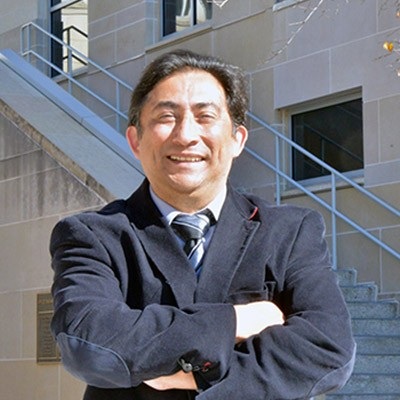
University of Texas at San Antonio, USA
Mario Flores is an Assistant Professor at the University of Texas at San Antonio whose research focuses on artificial intelligence, natural language processing (NLP), speech processing, and computational biology. He earned degrees in Applied Mathematics and Electrical Engineering with a specialization in Computational Biology in 2015 and completed postdoctoral training at the National Center for Biotechnology Information (NCBI) at the National Institutes of Health (NIH).
His research develops interpretable AI and deep learning models that predict disease phenotypes, identify biomarkers, and support clinical decision-making using multimodal biomedical data. While his laboratory has extensive experience developing AI methods for genomics, medical imaging, and electronic health records, his recent work has expanded to speech and language technologies for healthcare.
His current research focuses on multimodal AI frameworks that integrate acoustic speech features with natural language transcripts to enable the early detection and objective assessment of neurological and neuropsychiatric disorders, including aphasia and depression. By combining transformer-based language models, speech representation learning, and explainable AI, his goal is to develop scalable, objective, and clinically meaningful tools that assist clinicians in diagnosis, disease monitoring, and personalized patient care.
Assoc. Prof. John Sie Yuen Lee
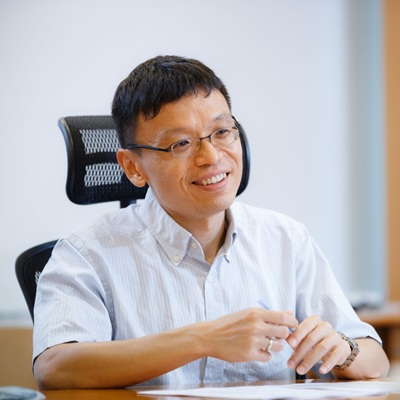
City University of Hong Kong, China
John S. Y. Lee is an Associate Professor at the Department of Linguistics and Translation at City University of Hong Kong. He received his BMath from the University of Waterloo in 2002, and his PhD in Computer Science from the Massachusetts Institute of Technology (MIT) in 2009. His research focus is on natural language processing (NLP) and computational linguistics, especially their applications in language learning and in education. His recent projects have focused on automatic text modification and readability assessment; question and exercise generation for language learning; and the use of Large Language Models in teaching and learning.
Prof. Anu G. Bourgeois
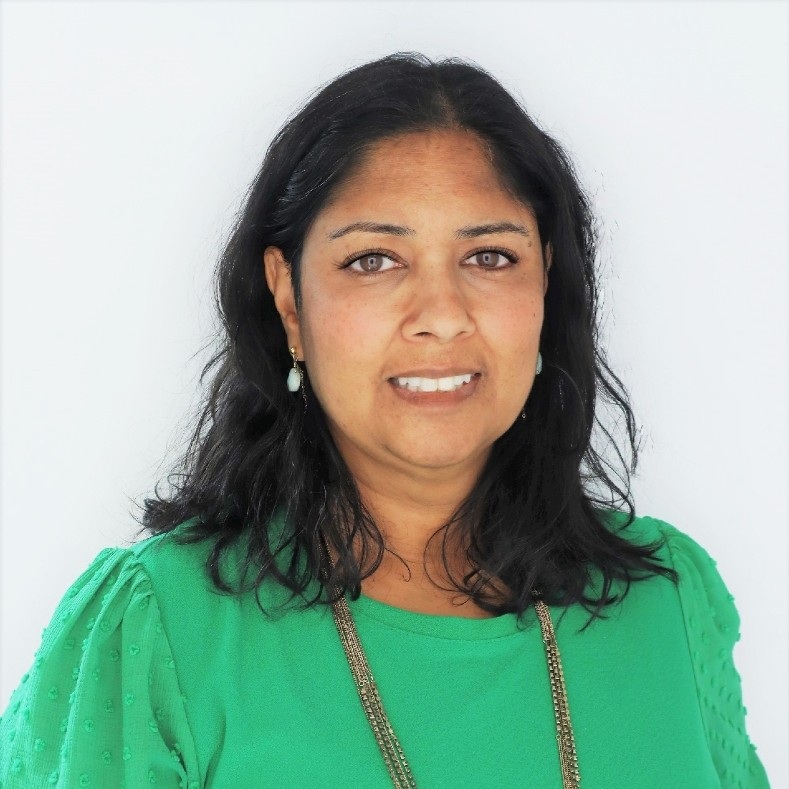
Georgia State University, USA
Dr. Anu G. Bourgeois is a Professor of Computer Science at Georgia State University and Director of the Collaborative Human-AI (CHAI) Center, a U.S. Department of Defense Center of Excellence in Advanced Computing and Software. Her research spans human-centered artificial intelligence, security and privacy, distributed computing, and computing education. Her recent work examines how people can effectively and responsibly interact with increasingly capable AI systems, including research on AI-assisted learning, program-level generative AI learning outcomes, secure and trustworthy interactions, and the changing skills and workforce demands in the tech industry.
Dr. Bourgeois has served as principal investigator or co-principal investigator on projects supported by the National Science Foundation, Department of Defense, National Institutes of Health, Georgia Department of Education, Google, Meta, Reboot Representation, and the Center for Inclusive Computing. She also co-founded RISE in Computing, an initiative focused on improving computing experiences and outcomes for Black women. Her broader work emphasizes developing technology, educational practices, and institutional approaches that expand human capability, opportunity, and participation in computing.
Prof. Hongyan Wang

Shenzhen University, China
Hongyan Wang is Professor at the College of International Studies, Shenzhen University, where she serves as Director of the Center for European Studies and is Associate Editor of the Journal of Language. She holds her PhD in Linguistics from Leiden University in the Netherland supervised by Professor Vincent J.J. P. van Heuven. Professor Wang has published over 40 research papers on phonetics, granted two national invention patents, presided and completed over 10 research projects, including National Social Science Funded projects.
Dr. Vivek Shandilya

Bowie State University, USA
Dr. Shandilya’s work involves investigating and establishing the structures in the interaction of intelligent agents with conflicting & mutually unknown motivations in stochastic systems. This problem manifests in optimization & security situations of computational, biological, and socio-economic systems.
In SOPSS Lab we work on many related areas of computational sciences. The work involves machine learning, mathematical modeling, information theory, the design & analyses of algorithms for learning & optimization and design and development of optimization and security and recommendation systems.
Prof. Sule Yildirim Yayilgan

Norwegian University of Science and Technology, Norway
Professor Sule Yildirim Yayilgan has worked at the Department of Information Security and Communication Technology (IIK), NTNU since 2009. She received a MSc. degree in Computer Engineering in 1995, and PhD in Artificial Intelligence and Computer Science in 2002. She has been working in academia for the last 30 years with teaching and research activities. She served as head of the department between 2005-2009. She has participated in projects funded by EU Horizon 2020, Eurostars, Erasmus+ programs, the Research Council of Norway, the Regional Research Council of Norway and the Ministry of Foreign Affairs, Norway. She belongs to the Center for Cyber Information Security (ccis.no) and she is leading the research group MR PET: Multidisciplinary Research group on Privacy and data protEcTion. She has been supervising students at different academic levels and has published more than 100 journals and conference papers.
Prof. Marija Brkić Bakarić
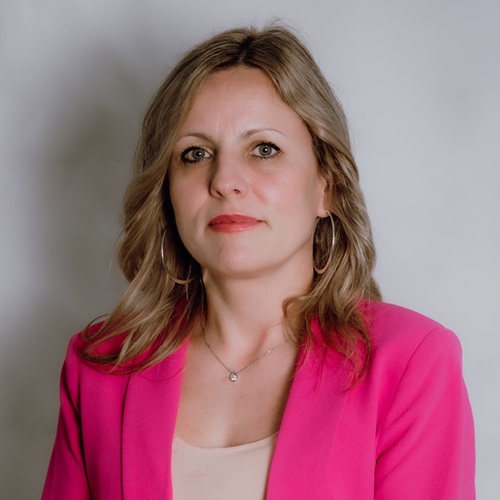
University of Rijeka, Croatia
Marija Brkić Bakarić is an Associate Professor at the Faculty of Informatics and Digital Technologies, University of Rijeka, Croatia, where she serves as Head of the Chair of Software Development. She previously led the Laboratory for Data Engineering and Computational Linguistics (2021–2023), where she remains an active member, and is affiliated with the University's Centre for Artificial Intelligence and Cybersecurity.
Her research focuses on machine learning, deep learning, natural language processing, machine translation, and data mining, with applications across diverse domains.
She has led and contributed to numerous national and international research projects, including EDIH Adria, Croatian Science Foundation (HRZZ) projects, bilateral Croatian-Chinese and Croatian-Slovenian collaborations, and initiatives supported through COST, Erasmus+, EU strategic innovation partnerships, and the Research, Development and Innovation (IRI) programme.
Her international academic experience includes research visits to the University of Stuttgart's Institute for Natural Language Processing and several visits to China Agricultural University.
She has authored over 90 peer-reviewed publications in leading journals and conference proceedings, served on organizing and programme committees of numerous international conferences, and acted as guest editor for several special issues of scientific journals.