

Conference Venue

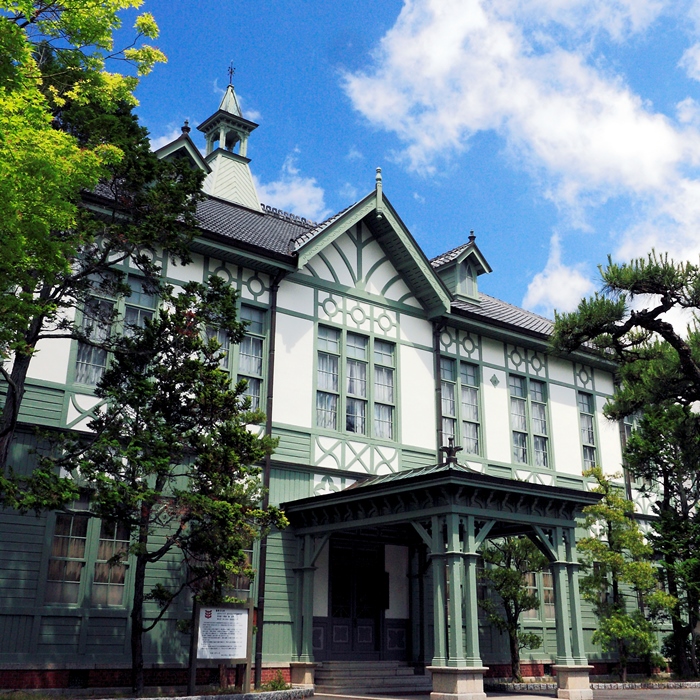
Nara Women's University
Address: Kitauoyanishimachi, Nara City, Nara Pref. 630-8263 | 〒630-8506, 奈良市北魚屋東町
Nara Women’s University was established in 1908 as Nara Women’s Higher Normal School for training female teachers for women’s teacher training schools and high schools for girls and kindergarten teachers. Nara Women’s University was established in 1949 under the National School Establishment Act as the daughter organization of Nara Women’s Higher Normal School and has been engaged in education and research activities of “teaching and researching specialized science and culture, as well as imparting knowledge widely and developing abilities as a higher educational institution for women.” Since the establishment of the Graduate School of Home Economics (master’s course) in 1964 and the Graduate School of Letters (doctoral course) in Comparative Culture in 1980, the university has been expanding and enriching its graduate schools with the aim of “cultivating advanced research skills and the rich academic knowledge necessary to engage in independent research activities as researchers or in other highly specialized work and to serve as a foundation for such activities.
Furthermore, in April 2004, the university transitioned from a national administrative agency to become a new national university corporation, and in April 2006, in collaboration with Ochanomizu University, we established a joint major in life sciences in the master’s and doctoral programs. In April 2022, the university merged with Nara University of Education and became Nara Women’s University, Nara National University Organization, and opened the Faculty of Engineering at the same time of the merger.
Through the enrichment of its undergraduate and graduate schools, the University has sent many outstanding graduates, graduates, and degree recipients into society since its inception. In particular, we are proud of the significant role we have played in training teachers for kindergarten, elementary, junior high, and high schools; fostering women researchers in the fields of humanities, home economics, and life and environmental sciences; and fostering students and researchers in the sciences, where the percentage of women is significantly low.